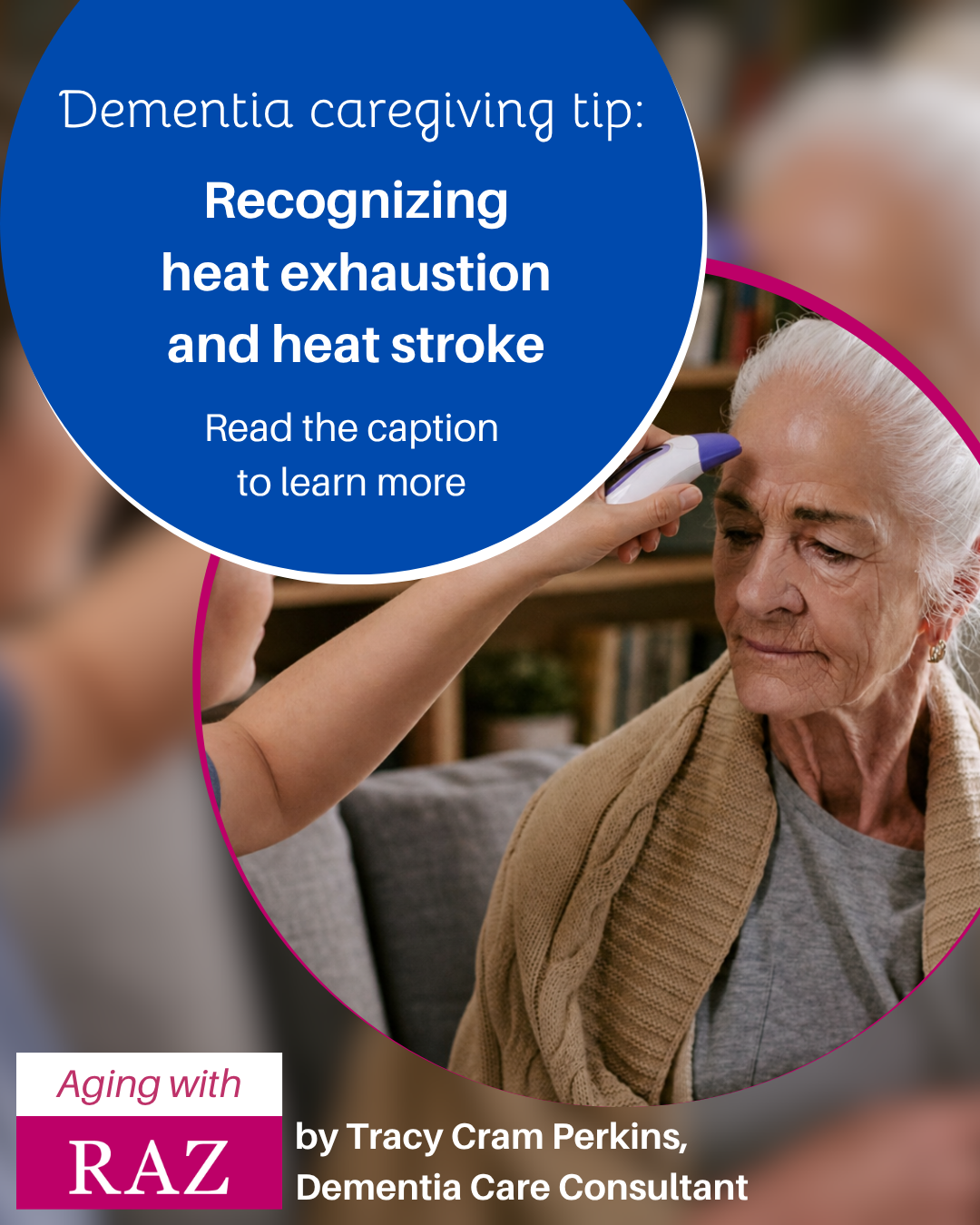
Recognizing heat exhaustion and heat stroke
When it’s hot, we already know we need water, rest, and shade. That said, our loved ones may not recognize there is an issue.
Heat exhaustion and heatstroke are caused by the body overheating. It can happen for a few different reasons. In someone with brain changes their disease can impair their body’s ability to regulate temperature or alert them to the problem.
In warm weather, a person with dementia may be less aware of their surroundings and may not recognize they are overheating including wearing clothing that is inappropriate for hot weather.
If you suspect heat exhaustion or heat stroke, get your digital thermometer.
Look for the following symptoms for heat exhaustion:
➡️ Higher core body temperature typically between 101 (38°C)—103°F (39°C).
➡️ Little to no worsening of cognition.
➡️ Heavy sweating.
➡️ Cold, clammy skin.
➡️ Muscle cramps.
➡️ They feel tired.
➡️ Thirsty.
➡️ Fast heart rate.
➡️ Fast and weak pulse.
➡️ Hyperventilating.
➡️ Dizziness.
➡️ Nausea.
➡️ Headache.
If left untreated it can become heat stroke. The symptoms for heat stroke:
➡️ Higher core body temperature. Heat stroke: 104°F (40°C) or above.
➡️ Worsening cognition.
➡️ Changes in sweating such as hot or dry skin
➡️ Flushed Skin
➡️ Nausea and vomiting
➡️ Slurred or mumbled speech
➡️ Rapid breathing
➡️ Racing heart rate as the body tries to cool itself
➡️ Seek immediate medical attention.
➡️ Call 911.
Before EMS Arrives:
➡️ Move them to a cooler or shaded area.
➡️ Loosen or remove excess clothes.
➡️ Have them lie down with legs elevated.
➡️ Use any means to cool their body: fanning, soaking towels in ice water then apply them to their skin.
If heat stroke is suspected do not give them fluids, they will be at risk of inhaling the liquid into their lungs.