Aging with RAZ
Weekly caregiving tips by Tracy Cram Perkins, a dementia care consultant

Weekly caregiving tips by Tracy Cram Perkins, a dementia care consultant
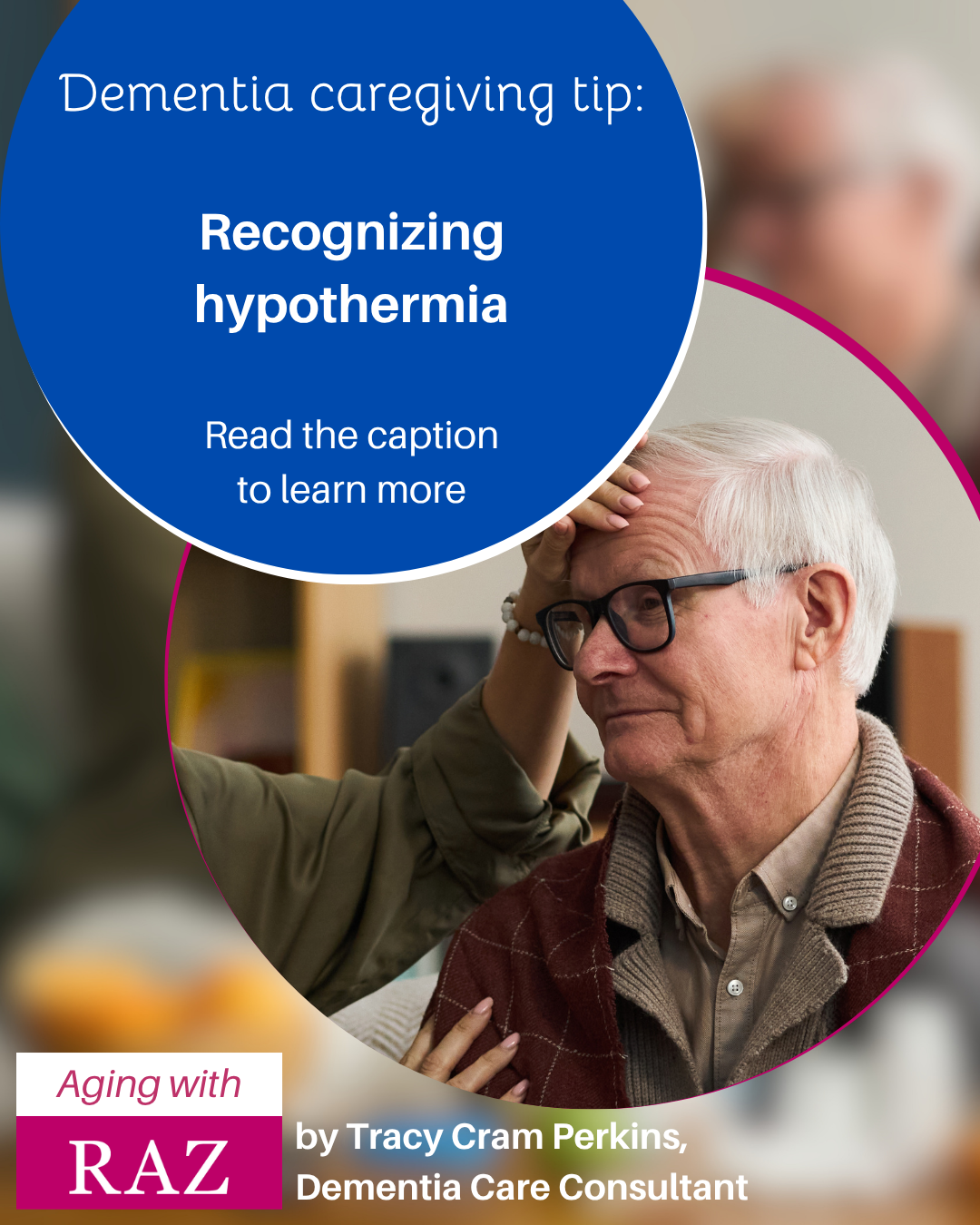
Hypothermia can happen for several reasons. In someone with brain changes the disease can impair their body’s ability to regulate temperature.
🔷 They may not recognize they are cold.
🔷 Wandering.
🔷 Can’t communicate they are cold.
🔷 Stress.
🔷 Moved to an environment that is cooler than their previous living space.
Symptoms of hypothermia can be difficult to recognize in a person with dementia because the first symptom is a change in their mental status such as a change in their personality. If they can’t explain what they are feeling, you might see aggression, apathy, disorientation, signs of exhaustion, or feeling tired. Is it dementia or hypothermia?
Look for the following symptoms:
➡️ Worsening cognition.
➡️ Shivering is usually the first recognizable sign. However, with extreme hypothermia, shivering will stop.
➡️ Fumbling of the hands.
➡️ Stumbling.
➡️ Slurred or mumbled speech.
➡️ Cool stomach. Touch the back of your hand to their skin under their clothing. If your hand is warmer than their stomach, treat for hypothermia.
➡️ Lower core body temperature. This can be very difficult to determine without a digital thermometer which can read below 90°F (32°C).
Someone with mild hypothermia will have a temperature between 90°F (32°C) and 95°F (35°C). Below 90°F (32°C) is severe hypothermia.
If they have hypothermia, get them someplace warm to prevent more heat loss. Treat them gently to prevent cardiac arrest. Replace any wet clothing with dry clothing. Cover their head and neck. Wrap their body with a blanket (electric, if available), towels, pillows, sheets, or even newspaper. Use anything that will prevent further heat loss.
If they have mild hypothermia, shivering will help to rewarm their body. Do not give them coffee or alcohol because both will cause heat loss.
❗️When to Call 911: Call for emergency medical services if their temperature is below 90°F (32°C) or you do not have a way to warm them. They may lose consciousness. Have them lie down flat while still warming them. If they stop breathing, begin CPR while still warming the rest of their body.