Aging with RAZ
Weekly caregiving tips by Tracy Cram Perkins, a dementia care consultant

Weekly caregiving tips by Tracy Cram Perkins, a dementia care consultant
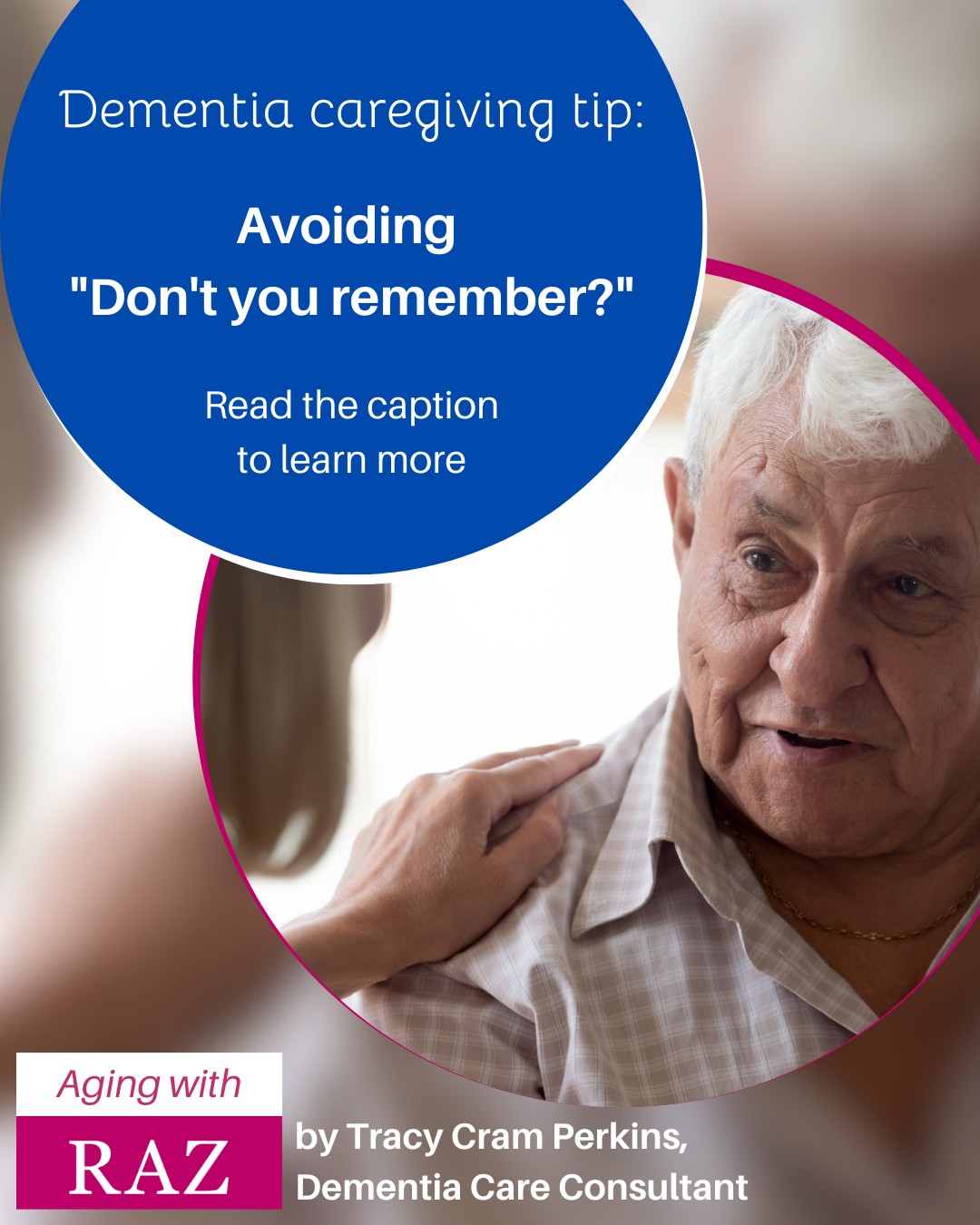
For our loved ones with advancing brain changes, they are losing their agency.
What is happening with them? The area that stores short-term memory is shrinking and developing holes. There is no space available for new memories. They can’t remember they just ate dinner or that we’ve told them 12 times already we are going to a doctor’s appointment or where they left their keys.
They operate on emotion-related memories. We are their safe anchor. They look to us for guidance. When we make them feel good, they remember the feeling and associate us with love and safety. When we make them feel bad, they remember those feelings and respond in kind.
The “Do you remember” or “Don’t you remember” questions are the hardest habit to break. So how do we do it?
➡️ Take a deep breath or two or five
➡️ Give yourself a moment to process and calm your emotions
➡️ Body language matters. Smile, whether you feel like it or not. It will keep them calm
➡️ Redirect or distract them by using tools to empower them
Consider this tool for the day’s frequently asked question (FAQ): place a white wipe board where they can see it. Outline the board with bright red or yellow or lime green masking tape to get their attention.
💡 Pro Tip: Change the tape color every two weeks.
Using black markers, write down the day, date, and any activities planned for that day. Leave a space for the FAQ.
The first time they ask a question, giggle while answering the question. The second time they ask, laugh with them, answer the question and write in on the board so “we both can remember.” The next time they ask, tell them you are busy or forgot and could they read it off the board.
The boost in finding the answer for you both will return their agency to them. The emotionally related memory will help them find their own answers and perhaps give you a break.
When in the car, do the same thing with a canary note pad. Ask them to hold it because you are driving. They are now your co-pilot.
Tools will change as their brain changes. Experiment to see what works best for both of you.