Aging with RAZ
Weekly caregiving tips by Tracy Cram Perkins, a dementia care consultant
Weekly caregiving tips by Tracy Cram Perkins, a dementia care consultant
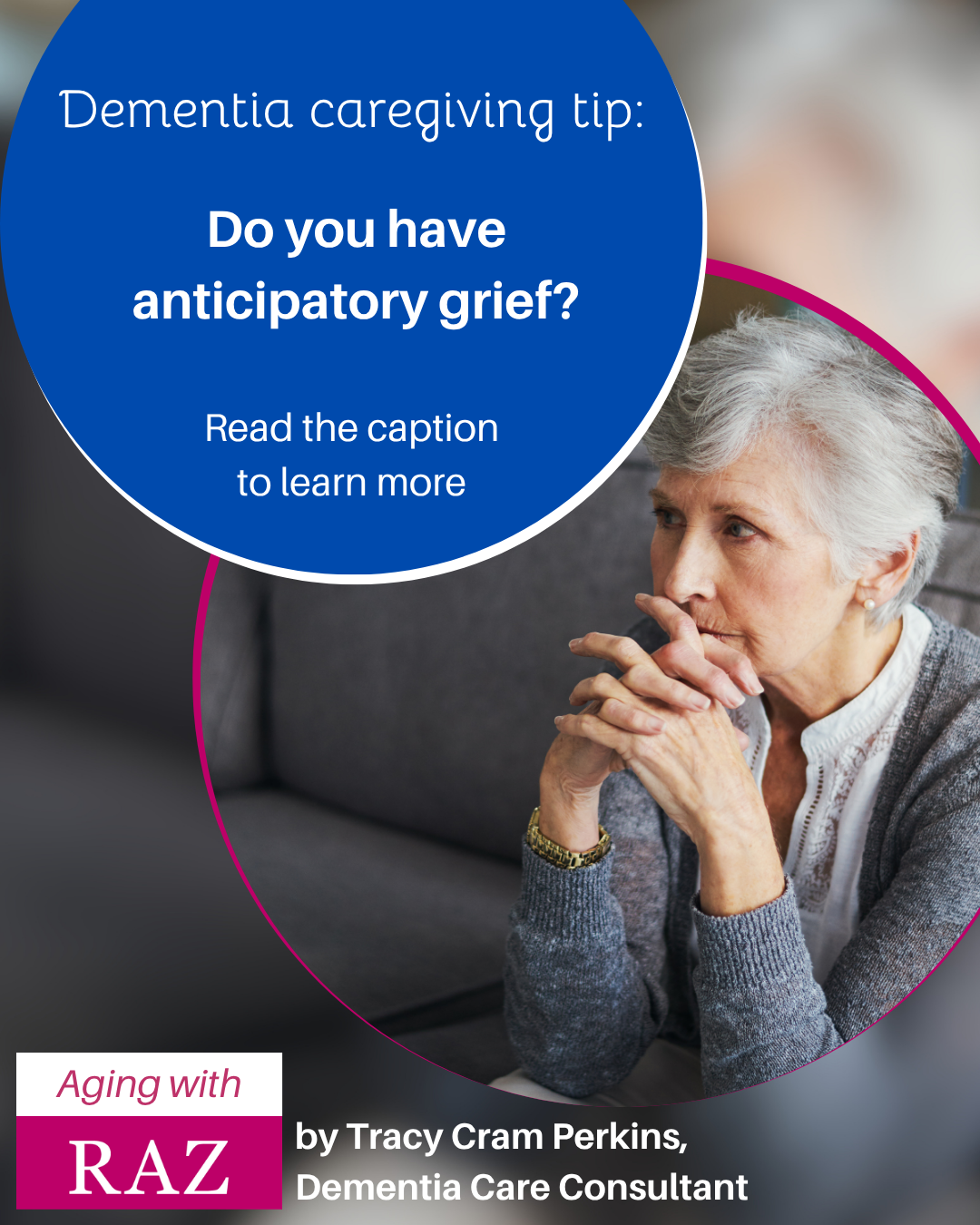
You are caring for a loved one. One night after dinner you are standing in the kitchen staring off into space. That heavy feeling you have been fighting for some time now overwhelms you. Your hands begin to shake. You have an almost uncontrollable urge to scream and cry.
What is wrong with me?
You are not going insane. You are losing your foundational relationship with your loved one as their brain changes progress even though they look the same on the outside. It’s called anticipatory grief.
Anticipatory grief is the emotional pain, mourning, and sorrow experienced before an impending loss occurs. It combines hope and heartbreak.
Signs of anticipatory grief :
➡️ Overwhelming emotions like sadness, anger or loneliness.
➡️ Difficulty sleeping.
➡️ Loss of appetite or overeating.
➡️ Difficulty concentrating.
➡️ Being preoccupied by replaying different scenarios in your head.
➡️ Withdrawal from others.
How to cope with anticipatory grief:
➡️ It’s important to recognize that grief is normal.
➡️ Feel your emotions instead of forcing them down. If you won’t let yourself cry, write a letter to your future self or write it in a journal.
➡️ Talk about what you are going through and share your feelings with those who are going through the same thing. It can be very validating.
Prioritize what you can do take care of yourself:
➡️ Sleeping.
➡️ Eating healthy food.
➡️ Moving your body throughout the day.
➡️ Drinking water: 10 to 15 cups per day.
➡️ Limiting caffeine.
➡️ Avoiding alcohol and recreational substances.
➡️ Taking breaks.
➡️ Asking for help when you need it.
➡️ Joining a support group.
➡️ Spending time with people who make you happy.
✅ Positive aspects of caregiving:
There are times when we are grieving so hard we can’t see beyond the pain, unconscious we are stockpiling future regrets. As a result, we deny ourselves those moments of connection, the moments of personal growth, and the happiness of creating moments of joy that carry us through the difficulties. Like laughing together over the failures and learning new ways to communicate and give comfort.
Through self-care, you give yourself permission to enjoy the collateral beauty.