Aging with RAZ
Weekly caregiving tips by Tracy Cram Perkins, a dementia care consultant

Weekly caregiving tips by Tracy Cram Perkins, a dementia care consultant
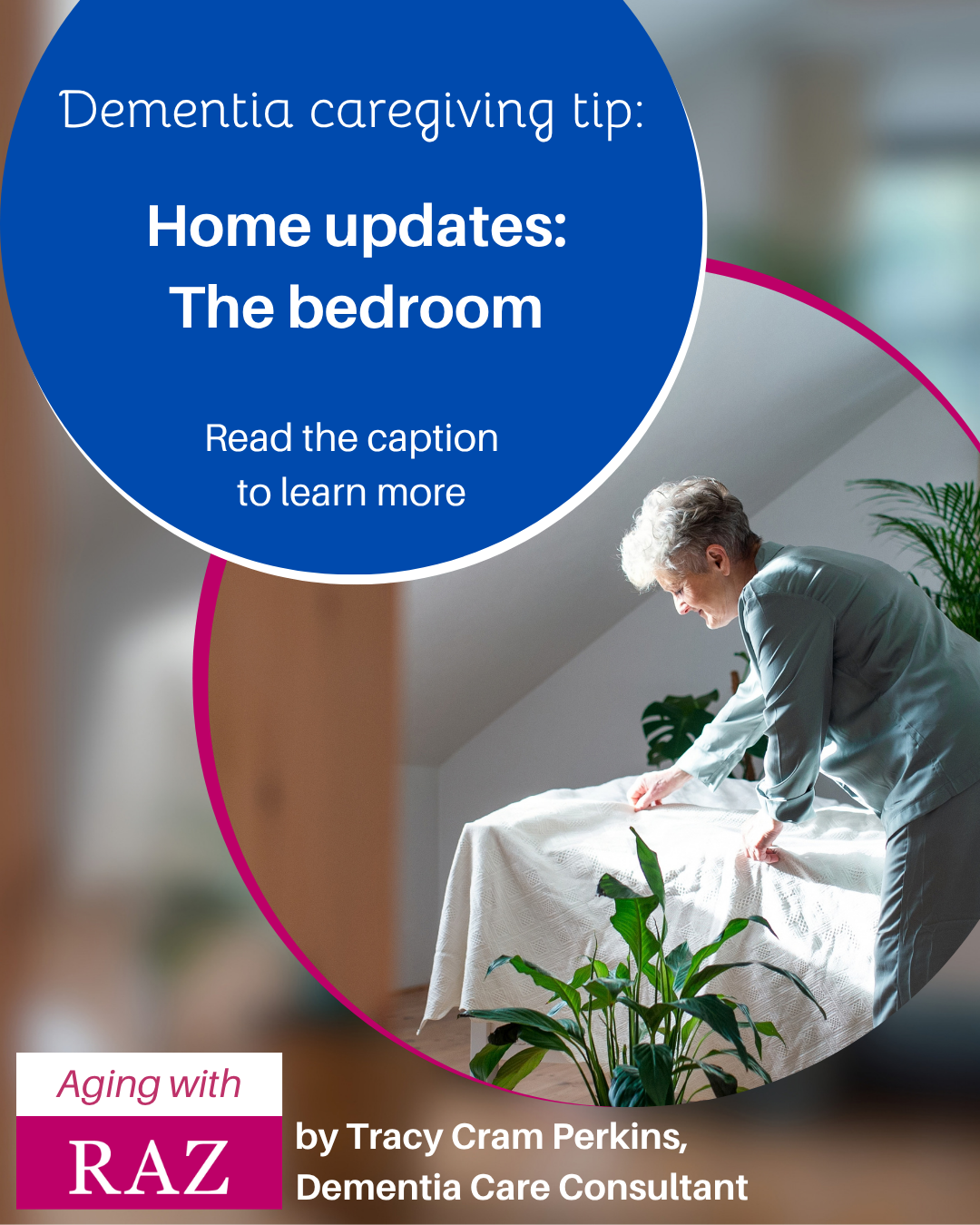
For older adults and people living with dementia, small changes to the living environment can make a meaningful difference. Light that falls evenly across a hallway, a door that is easy to recognize, a chair with supportive arms, or a bathroom that is simple to navigate can reduce uncertainty and support familiar routines.
When home updates respect the person who lives there, and meets their changing needs, it helps family members and caregivers spend more time connecting and less time anticipating the next hazard.
What to look for: The bedroom is a place for rest, but it also supports the important transitions at the beginning and end of each day. Warm white overhead lighting helps maintain contrast and encourage sleeping and may help reduce sundowning.
Confirm the route from the doorway to the bed, closet, and bathroom is direct and free of obstacles. Soft blue, warm cream, warm peach, dusty rose, or calm green wall colors can make the room feel cozy without becoming dim. Covering high-gloss surfaces with a matte finish helps reduce confusion and fear.
The Furnishing:
➡️ Is the bedside lamp reachable without getting up?
➡️ Would motion-activated, low-level lighting help mark the nighttime route to the bathroom?
➡️ Does the bedding contrasts with the floor and bedframe? A solid-color bedspread is easier to visually understand than a busy pattern.
➡️ Is the bed at a comfortable height, with a stable surface nearby for glasses, water, and a phone?
➡️ Do familiar photographs and meaningful objects remain visible, offering points of recognition?
➡️ Do you need to create a parking space for a walker or wheelchair?
➡️ Are there curtains or shades over the window to reduce shadows or glare and help absorb sounds?
➡️ If a mirror causes issues, like “stranger-danger,” either remove it or cover it with a window covering.
Do not make changes without consulting your loved one.
When a home supports the changing needs of an older adult or person living with dementia, it can give you more space to focus on connection instead of crisis prevention.