Aging with RAZ
Weekly caregiving tips by Tracy Cram Perkins, a dementia care consultant

Weekly caregiving tips by Tracy Cram Perkins, a dementia care consultant
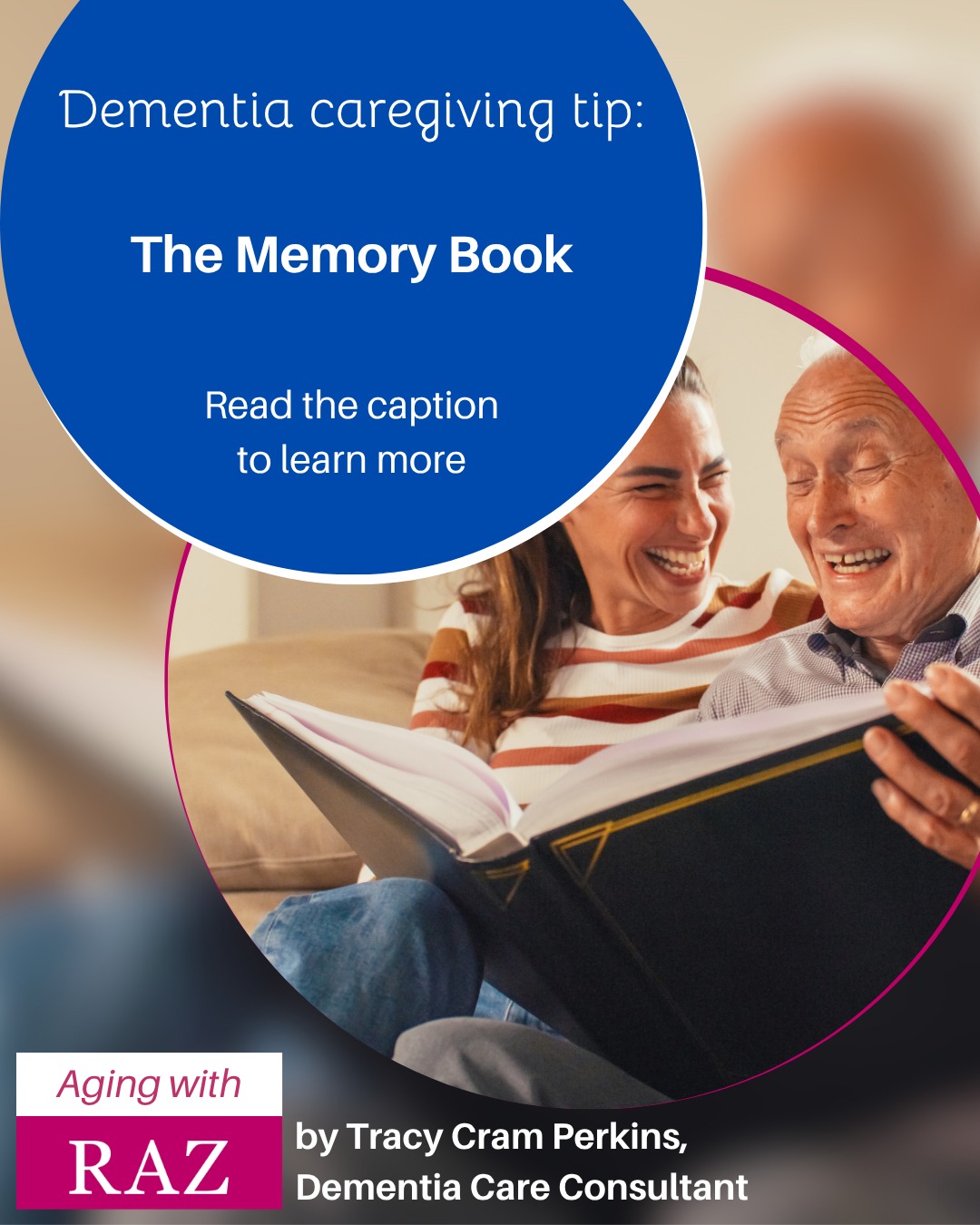
When caring for a loved one with dementia there is one tool that may help you in three areas, the Memory Book.
What it’s used for:
➡️ Finding “when” your family member is in their memory timeline to join them where they are.
➡️ Respite Tool, engaging with one or two family members or friends in conversation.
➡️ As a distraction technique when they are upset or sundowning/sunrising.
Find photos of your loved one from their childhood from age 5 up to their current age. Incorporate meaningful things from their life. Examples: places they worked, worshipped, vacationed, or volunteered, include hobbies. Embrace family lore and multigenerational art projects and favorite pets.
When it comes to Memory Books, less is more. Too much information on a single page can be overwhelming. Guidelines:
➡️ Use a three-ring binder.
➡️ No more than 3 people in a photo.
➡️ Maximum of two photos per page.
➡️ Descriptive sentences under photos no longer than 8 to 10 words so they don’t forget the beginning of the sentence before they get to the end.
➡️ Large print.
➡️ Removable pages
If English is your loved one’s second language, prepare duplicate pages in their native tongue. Losing their second language can happen in as quickly as two to four weeks, especially after a fall or an illness.
If you don’t speak their first language, watch for changes in their behavior. We all crave kinship, if they shake their head, weep, or won’t look at you, place the book in the native tongue in their hands. If they engage, it is time to find an interpreter.
There may come a time when your loved one becomes upset by an image in their Memory Book. They may not recognize someone, or they may think it is a person they don’t get along with. Be flexible, relabel it to their liking or create another page with them to replace it.
💡 Pro Tip: If they ask about a loved one who passed, don’t force them to relive the loss. Create joy, record a video of them expressing the love for their loved one that you will “send.”