Aging with RAZ
Weekly caregiving tips by Tracy Cram Perkins, a dementia care consultant

Weekly caregiving tips by Tracy Cram Perkins, a dementia care consultant
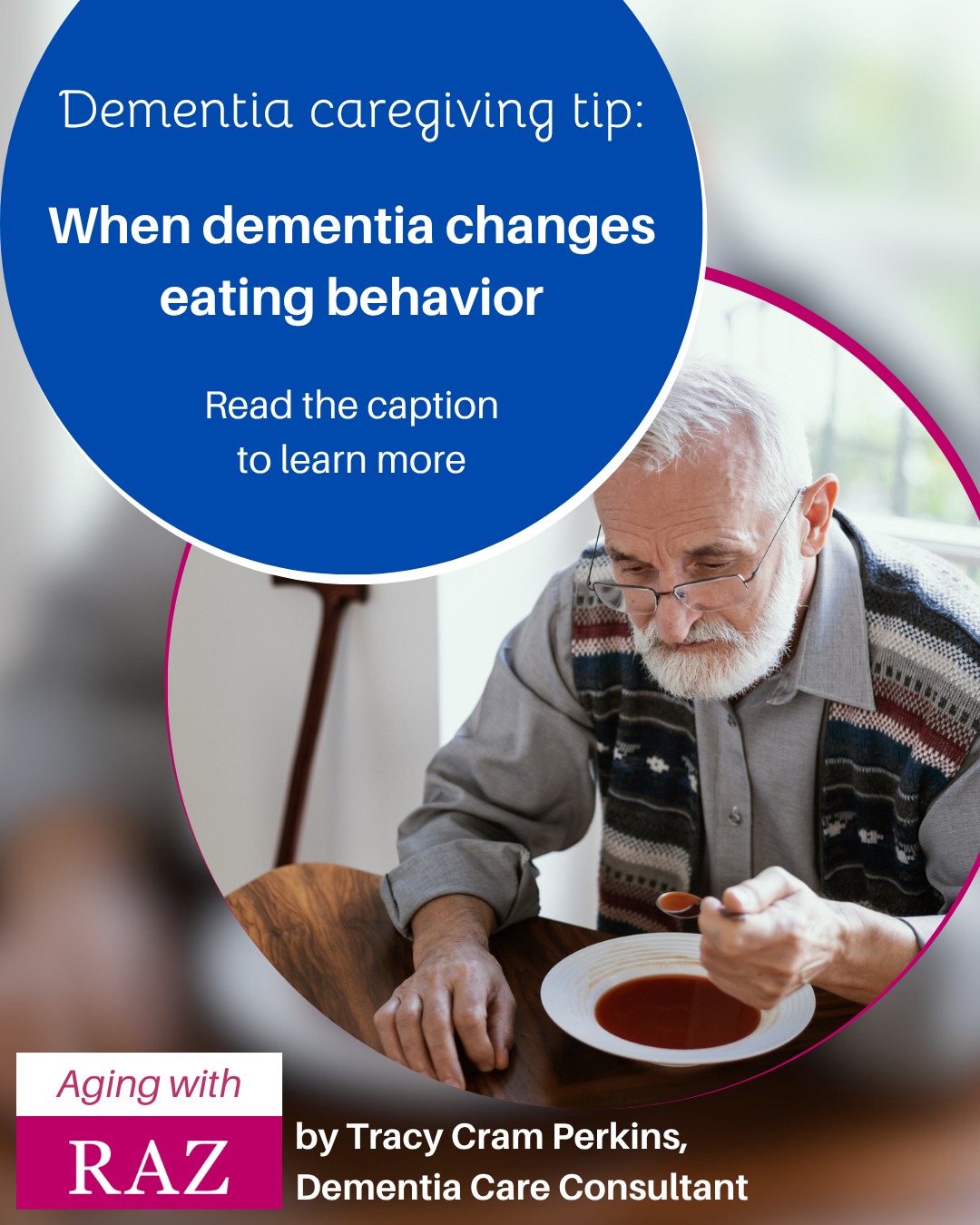
Why isn’t my loved one eating?
➡️ Can’t see the food to eat it.
➡️ No longer recognizes food.
➡️ Difficulties swallowing.
➡️ Decreased appetite due to aging.
Let’s address the first stage, when they can’t see the food to eat it.
In natural aging, the lenses in our eyes thicken, making it more difficult to see without additional lighting or glasses. As brain changes progress, someone with dementia develops a form of color blindness called achromatopsia. Eventually they see black, white and the contrast of bright colors such as red, blue, yellow and lime green.
Imagine a Thanksgiving dinner, hors d’oeuvres served on small ruby-glass plates and your loved one with dementia is eating the hors d’oeuvres and chatting with family members. It’s time for dinner and everyone gathers around the table.
Plates are piled high with turkey, stuffing, mashed potatoes and green bean casserole all smothered in gravy dangerously close to spilling over the side of the plate. Everyone dives in except your loved one who is looking at the plate, shaking their head and weeping. No amount of coaxing will get them to eat.
What is going on?
They see an empty plate. There isn’t enough contrast for them to recognize the food.
Mealtime Support without Struggle
How can we empower them to eat? We preserve their dignity by:
➡️ Using a bright red or bright blue plate.
➡️ Serving them in courses starting with the protein, followed by carbohydrates then produce. If they feel singled out, join them eating in courses.
➡️ Allowing them to finish each course before serving the next.
Bright red or blue cups will help them drink more fluids.
Use bright colors sparingly. Too much color can be overwhelming to someone with brain changes. They will show you by removing or hiding it.
💡 Pro Tip: If you are having trouble getting them to eat, give them something small that is slightly sweet or lightly salty to encourage salivation five to ten minutes ahead of eating, signaling that it is time to eat.
As caregivers, enabling our loved ones to continue self-feeding takes one more thing off our already full plate.